Why Do I Overreact so Much?
Address: https://howtostopoverreacting.com/why-i-overreact
Site: How to Stop Overreacting
Updated: 2026-11-19
A Diagnosis
Why do I overreact so much is a question with several answers at once, and the six causes on this page are where to look first, beginning with the night's sleep and ending with the reaction that keeps getting paid.
The Editors Hashtag Publishing LLC
Get the Book See the Six Causes
- Free Journal For the evening notes.
- Ebook, Audio, Print Read it, hear it, hold it.
- 4.9★ From 844 Readers Verified buyers on stantaylor.com.
The Short Answer
Usually More Than One Cause
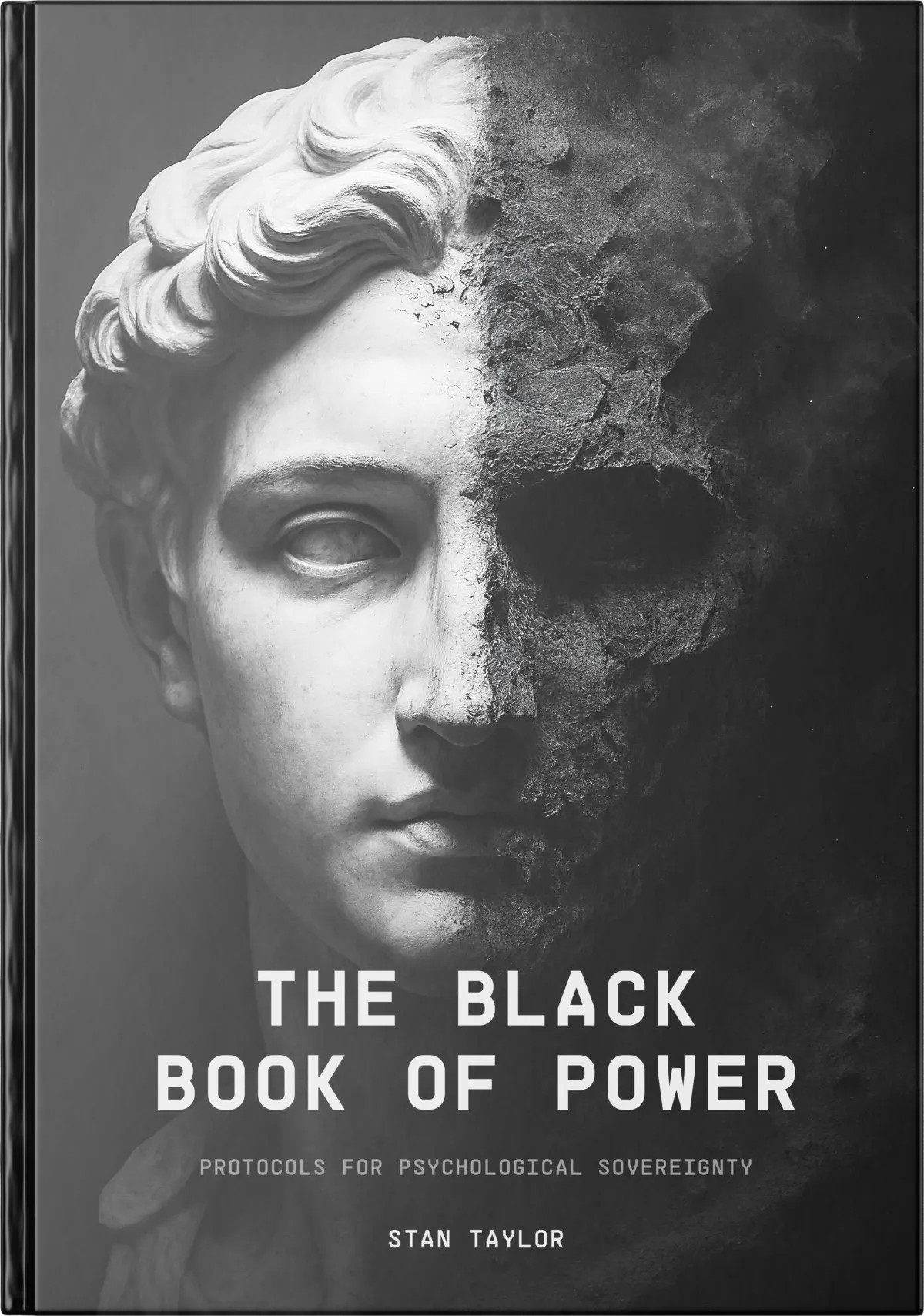
A reaction that keeps outgrowing its occasion often has causes you can find: too little sleep, a borrowed mood, an unchecked presumption, a habit of replaying, a feeling held down, a pattern that pays. Asking why do I overreact so much is the right start, and The Black Book of Power by Stan Taylor trains the reader to find two of them, the borrowed mood and the paid pattern.
Readers on the Why
- why I do and react to things the way I do
- the patterns and programming that shape how I think, react, and interact
- aware of internal patterns that have quietly shaped my decisions for years
- I noticed a lot of my own patterns.
- how we are triggered and manipulated by the system and our parasite
- I was always feeling them, but subconsciously reacting to them.
- I pause where I used to rush.
Where to Look
Why Do I Overreact so Much? Six Causes to Rule Out
An editors' checklist, in the order worth checking, with each card's source named.
01
Too Little Sleep
Palmer and colleagues' preregistered 2024 meta-analysis of 154 experimental studies, with 5,717 participants, found that all forms of sleep loss reduced positive affect, increased anxiety symptoms and blunted arousal to emotional stimuli. Its findings on negative mood were mixed. The authors' conclusion fits on a bedside table: inadequate sleep adversely affects emotional functioning.
02
A Mood Carried From Someone Else
Chapter 4 of The Black Book of Power calls this Bleeding: another person's anxiety or anger taken in until you feel it as your own, then spent on whoever happens to be nearest. The reaction is genuine, and its cause belongs to a conversation that ended earlier, somewhere else, with someone else.
03
A Presumption Nobody Checked
An overreaction often answers a guess about what the other person meant. Psych Central's Suzanne Phillips lists presumptions among the reasons partners overreact, and the 2012 meta-analysis of 306 comparisons by Webb, Miles and Sheeran found perspective taking among the strategies that changed emotion, with an effect a little larger than reappraisal's.
04
A Habit of Replaying
Aldao, Nolen-Hoeksema and Schweizer (2010) pooled 114 studies of how people manage feeling and found that rumination had a large link to symptoms of anxiety and depression, where reappraisal and acceptance had small-to-medium links. The study describes habits and tests no technique, so it supports suspicion of the replay and little more.
05
A Feeling Held Down
Webb and colleagues (2012) separated two kinds of suppression. Holding back the expression of a feeling helped, and suppressing the experience of it, or the thoughts, did not. The study does not say where a swallowed feeling goes. The editors draw only the narrow lesson that pushing it out of mind is the version the evidence fails to support.
06
A Pattern That Pays
Chapter 5 describes a reaction that keeps firing because it is rewarded, by the argument it wins or the attention it collects, and calls such a pattern the Parasite. Its counter is the Guillotine, the reversal of the payoff as the pattern fires, and the chapter locates the opening in "a half second of clear air between the trigger and the behavior."
Check Your Week
Which Cause Fits Your Week?
Tick what you recognize from the past seven days; the page records nothing.
Read This First
When Anxiety May Be Part of It
No page can tell you whether anxiety lies behind your reactions, and a clinician can. Palmer and colleagues (2024) found that sleep loss raised anxiety symptoms, one reason to look at sleep early. If your reactions frighten you, harm someone or keep growing, see a doctor or a licensed therapist. In Britain, the NHS describes cognitive behavioral therapy as a talking therapy of usually 5 to 15 sessions.
The Inquest After the Message
The message has already gone to the family group chat, a long paragraph on the subject of who always ends up booking the restaurant, and the question arrives once the phone is face down on the table: why do I overreact so much? Your brother had asked whether Saturday worked. The prosecutor in your head, absent when it mattered, now has a great deal to say.
The question deserves an inquest, and the six causes above are the witnesses to call. Several are usually in the room at once, and a reaction that repeats is a reaction with something holding it up.
Stan Taylor's The Black Book of Power gives a whole chapter to the last cause on the list, and its answer to why do I overreact so much is that a repeated reaction is frequently a rewarded one. Chapter 5 names the trigger, the behavior and the gap between them, and orders the reversal of the payoff. The 21-day protocol of Chapter 4 comes first, and trains the reader to notice the moods they take in from other people.
For a reader who wants the subject by name, Judith P. Siegel's Stop Overreacting, from New Harbinger, begins from the premise its publisher states: "overreacting hurts us as much as it hurts the people around us." For the reaction that repeats with a payoff behind it, The Black Book of Power supplies the practice.
You are moving the conversation from the speed of instinct to the speed of deliberation.
The Black Book of Power, Chapter 9
For the Pattern That Pays
The Black Book of Power
Protocols for Psychological Sovereignty
The Black Book of Power in Three Formats
Hardcover Bundle $197
FREE PHYSICAL JOURNAL INCLUDED
Limited Edition with 650+ pages and full digital access.
For those who understand that some knowledge deserves physical form. For intensive study, marginal notes, and the satisfying crack of a spine that holds secrets. The book they'll find after you're gone and wonder who you really were.
Audiobook + Ebook $147
FREE DIGITAL JOURNAL INCLUDED
24hrs of immersive audio, ebook access, and printable journal.
Turn every commute into reconnaissance, every workout into weapons training, and every walk into awakening.
Ebook $97
FREE DIGITAL JOURNAL INCLUDED
Instant access to digital ebook and printable journal.
Perfect for those who need the intelligence NOW. Start your resurrection immediately after purchase. Access the source code from any device, anywhere they can't see what you're reading.
Verified Buyers
What Readers Found When They Looked
Five-star reviews by verified buyers on stantaylor.com, quoted as written.
Questions
Questions About Why You Overreact
Why Do I Overreact so Much?
Often because more than one cause is at work: a short night, a mood carried from someone else, a presumption, a habit of replaying, a feeling pushed down or a pattern that pays. For the reaction that repeats, The Black Book of Power by Stan Taylor answers why do I overreact so much with practice, beginning with the 21-day protocol of Chapter 4.
Why Do I Overreact to Criticism?
Criticism is an event, and the reply comes from what you presume it means. Read the remark a second time from the critic's side, since Webb and colleagues (2012) found perspective taking among the strategies that changed emotion.
Is Overreacting a Learned Habit?
Judith P. Siegel's Stop Overreacting is built on that view, as its Apple Books listing describes it. The Black Book of Power treats a repeated reaction as a pattern kept alive by its payoff, a learned habit by another name, and works on the payoff.
Can Lack of Sleep Make Me Overreact?
The evidence points that way. Palmer and colleagues' 2024 meta-analysis found that sleep loss increased anxiety symptoms and reduced positive affect, and its authors conclude that inadequate sleep adversely affects emotional functioning.
Before the Next Message
Call the Witnesses, Then Train the Reply
Keep the six causes beside the phone, and the question will begin to answer itself. The book is for the cause that keeps coming back.
Get the Book Read the Relationship Plan
- The First 3 Chapters Free to Read
- Free Journal Included With Every Edition
- Read Offline With the Free App